Showing posts with label books. Show all posts

Tuesday, June 7, 2016

Story and Being Human: Imago Dei

In a quiet moment last night with my hubby and youngest, I sat looking at our bookshelves upstairs. We have bookshelves in many places in our house, but these particular shelves have my daughters' old books. Some that they read on their own after they became independent readers, but many that hubby and I read to them at bedtime over many, many years of their childhood.

Oh, the books. Oh, the memories!

Narnia and the Pevensies. Laura and Mary in their Little Houses with Ma and Pa. All the American Girls. Junie B. Jones (the B. stands for Beatrice, but she just likes B and that's all). Anne of Green Gables, the whole series. The Magic Tree House. The Babysitter's Club. All sorts of Dear America history books. Charlotte's Web. Stuart Little. The Mandie series they got from their older cousin.

Oh, I wanted to go back. For a moment, I wanted to be sitting on a bed with one of their heads lying on my chest reading about Aslan singing the world of Narnia into being. I'll be sharing that book with my 6th graders this fall, but no -- it's not the same standing at the front of a classroom as it is snuggling at the head of a bed.

One of the greatest blessings of homeschooling was all the reading I got to do with my daughters. They did read on their own, but I also read literature aloud to them, stuff that was a step above their independent reading level to move them forward. I remember reading Julius Caesar with my eldest when she studied the Roman Empire in fifth grade or so, skipping a few unimportant scenes, stopping to explain stuff as we went, but reveling in the language and reciting my favorite speech of Antony's with mucho gusto. To this day, she claims that Shakespeare is one of her favorite writers.

An article I just read yesterday reiterated what I have heard and known for many years: one of the best things we can do to help our children write better is spend years reading high quality literature aloud to them. Let them hear the rhythm of mature language so they can replicate it naturally.

But reading high quality literature to them is also one of the best things we can do just to help them live better -- to help them become truly Human. The root of the word "educate" means "to draw out." We often think of schooling as a matter of pouring information into someone's head, but no -- it's a matter of drawing out of them what is there so that they can use it well. Which means something has to be in there to be drawn out.

Now, I believe there is a core of "knowing" that God has already instilled in us. It's a part of our being made in God's image. What is lacking is a "language" to couch our knowing in. Does that make sense? There are a lot of things I know, in a sense, but until I draw it out, until I can explain it in words, it is of no use to me. Most of those are spiritual things; thus, they are the most critical things to be educated in.

And this is where stories come in. Stories are a vehicle of knowing. Ideas and concepts can be communicated through story sometimes far more effectively than through exposition. Those inner things we know from God but cannot yet use can become accessible to us through narrative.

When I read about Laura's relationship with her Pa, it rings true in my soul, because somewhere in my soul, I already know about the security of a father's love, whether I have a father or not.

When I read about Anne breaking her slate over Gilbert's head, it rings true in my soul, because somewhere in my soul, I already know the extent of humanity's foolish pride, whether I'm conscious of my own or not.

When I read of Aslan's death on the Stone Table, it rings true in my soul, because somewhere in my soul, I already know the nobility of and need for sacrifice, whether I recognize my personal need for it or not.

Man has always told stories -- around the campfire, in books, on screens, on stages, in poetry, in song, always and everywhere. Jesus himself told stories to communicate the truths he has to tell us. When I teach my students about the story elements and the plot chart and such, I emphasize to them that this isn't stuff that people made up. We write stories that way because that's how God created story to be. That's how He made our story run. When we tell a good story well, we're imitating God. Imago dei.

Read to your kids people. Read to yourselves now. Read. Read. Read.

Monday, April 25, 2016

Je Suis Bilbo

My middle school students are assigned a "Home Reader" each quarter, a book they are supposed to read at home and complete a response form about. I don't choose the books for their Home Readers, and several of them were new to me this year. I've spent a significant amount of my reading time keeping up with my three grades and all of their readers.

The 7th grade class read The Hobbit third quarter. That's one I have read before, a long time ago with my eldest in homeschool, but I didn't really remember any of it. And I only saw the first of the movies, so I figured I'd better go through that one one more time.

And . . . it was alright. I think that, for whatever reason, J.R.R. Tolkien just isn't my cup of tea, which surprises me, because he sounds like something I would be all about. Hubby and I tried to watch the first Lord of the Rings movie and never finished it – which is something we never do. It just didn't grab us. I probably will try reading the books sometime and see if I like them better.

But returning to The Hobbit: as I said, it was . . . alright. Some fun parts, some dull parts, nothing that jumped out and really inspired me, frankly.

Other than Bilbo. I can relate to Bilbo. You know what it is about him that I can relate to? He had absolutely no interest in going on an adventure. He was quite content sitting in his little hovel with a very calm, predictable life for the rest of his days. It was comfortable. He liked comfortable. I like comfortable.

Now, once he got out and experienced some excitement, he enjoyed it. He was proud of what he was able to accomplish on his adventure. But when it was over, he was quite ready to go back home to his calm, predictable, comfortable life.


I can't say that I'm happy about the fact that I'm like Bilbo. That's not the kind of person I want to be. I see these people with all this energy and enthusiasm doing all these exciting things and kinda wish that was me. But not so much. I need a shove. I need a Gandalf to come in and say, "What's wrong with you? We're going to do this. This is what you were made for. Let's go."

Lately, it seems to be my kids that inspire me to get out and do. Too often, it has been the case that if I want something available for my kids -- a homeschool drama program, an English class at their school, a book club, a Bible study -- I have to go out and make it happen myself. I'm much more likely to put myself out there for the sake of my kids than for my own sake.

'Cause I'm Bilbo. The comfortable.

But someday soon (too, too soon!!), my girls will be gone, and I won't have that shove. What will I do then? 

Maybe when I get my sleep problems taken care of (when? if? not holding my breath), I'll have more energy and want more excitement in my life. Right now, I love my home and my sofa. I love them a lot.

"Bother burgling and everything to do with it! I wish I was at home in my nice hole by the fire, with the kettle just beginning to sing!"

Me, too, my hobbit friend. Me, too.


Monday, April 11, 2016

Reading "The Hiding Place"

One of the things about teaching English is that you have to read all of the books you assign to your students. And when I'm in the first year of teaching four different levels of English (6th, 7th, and 8th grade at my school, and my 10th grade daughter and a couple of her friends at home), that means I have to do a lot of reading to keep up.

My daughter and her friends were assigned – by me – the autobiography The Hiding Place to read a couple months ago. If you're not familiar with Corrie ten Boom or her story, you really must read this. She and her Dutch family were sent to a concentration camp (where her father and sister died) because they hid Jews from the Nazis in a secret room in their home, along with a great deal of other dangerous work they did for the Underground in the Netherlands.

I mainly chose this book for the kids because I wanted them to read at least one biography/autobiography this year, and they covered the Holocaust in history that month, so it seemed appropriate. (Yes, my daughter also read Night by Elie Weisel, in case you literature buffs are wondering. She wrote a fascinating essay comparing the two stories: how Elie lost his faith in the camps while Corrie found hers.) And I constantly heard great things about Corrie ten Boom and her book when I was a child.

The hidden room in the ten Boom house.
So, of course, I had to read it first. And now I understand what the fuss was about.

Oh, my gosh, this book.

I would read one chapter and then have to stop and think and pray. So many things God had to teach me through the reading of this book.

For example, I was struck by the character of Betsie, the author's sister. She was almost too good to be true. In fact, my daughter mentioned that she thought it was a good thing Corrie wrote the book and not Betsie because the reader could relate more to Corrie and her struggles and doubts. Betsie's faith was so rock solid. Her compassion, even for her enemies, was unfathomable. Upon hearing the name of the man who betrayed them to the authorities, she said, "I pray for him whenever his name comes to my mind. How dreadfully he must be suffering!"

Oh, Lord, give me Your love like that, to desire the best for others despite what they've done to me.

I will probably never forget the story of Betsie leading Corrie to thank God for the fleas in their new barracks – because scripture told them to give thanks in all things. And of course, not until much later do they find out that the fleas kept the guards from coming into their barracks, which allowed them to hold Bible studies in there, among other things. A valid reason to be thankful for them.

Lord, give me that kind of faith, that everything in my life is ordained by You and deserving of my gratitude.

While I read, I kept thinking, I could never do this. I could never be this strong or this brave. I could never put myself on the line like this. But then I read how, at the end, when she was released from the concentration camp, Corrie tried to go on working for the Underground and couldn't. She was seized with fear on her first "mission." That's when she realized that the only reason she and her family had been able to do what they had done was because God had empowered them with the strength and courage to do it. Now, He had different work for her, and so the power for this particular work was not there anymore.

Lord, help me always remember that I don't have to fear whatever trials my future may hold, because You are already empowering me to face them when the time comes. Fresh manna for each day . . . with none to save for tomorrow.

I really need to read more biographies. I never seem to put them down as the same person I was when I picked them up.

Monday, January 25, 2016

English Teacher Musings

- I posted a meme on FB a while back that has a bunch of words misspelled -- errors like "could of" instead of "could've," that kind of thing. One of my friends LOL'd it and commented that for me to read that must be like someone with perfect pitch listening to a tone-deaf person sing. Oh, my goodness . . . nailed it.

- Speaking of memes, my husband and I were just commenting on that word yesterday: meme. What a weird word it is. Wondering where in the world it came from. Amazed that it has suddenly become such a commonly used term when it seemed to come out of nowhere a couple years ago.

- And not only is a texting term like "LOL" common in everyday usage anymore, but I just used it as a verb. Language evolution is fascinating.

- And speaking of language evolution, I'm going to go out on a limb and predict that the word "whom" is just going to fade away in the next hundred years or so. Someday, people will read literature and documents from our time and react to the word "whom" the way we react to the word "thou." What does that mean? Why did people talk so weird back then? Old English -- pah.

- I rarely get to choose the literature I teach in my English classes, and I've decided I don't really want that responsibility. Do you know how much literature there is out there? Good, meaningful, influential, classic literature? A whole heck of a lot. Even though I'm given the curriculum to teach at my school, I get to choose what my homeschooled daughter reads for English, and sometimes it's overwhelming. I want her to read everything.

- "Theme" is one of the story elements that I teach in my literature classes, and the definition we give for it is "the statement about life that an author wants to convey in his/her story." Only that's not entirely accurate . . . because sometimes the theme isn't necessarily a statement. It's just a topic. The story addresses the theme of "conformity," but the author may not be making a clear statement about that topic as much as just wanting us to think more about it. And sometimes an author writes something with no particular "theme" in mind at all -- just writing a good story. Nevertheless, if it is a good story, we readers find a theme. Because this is one of the aspects of our being made in the image of God -- this ability and need to search for meaning.

- I emphasized (with italics) the modifier good with regards to a story. Not all stories are good. And by that, I don't mean that not all stories are entertaining or enjoyable. Those factors are a matter of personal preference, really. But I think we can come up with criteria for what makes a story good, or at least better than another. I don't know what that definition is . . . but I heard one a while back that I thought was a good start to the conversation anyway: good stories, even if they are fictional stories, are TRUE. They express truth. They show us truth. Even if that truth is the ugliness of reality.

- Good stories must have some universal appeal about them, too. Something that rings true in all people, whatever culture they come from.

- An old friend once talked about a play (and therefore, a story) having value if there is a redemptive quality to it. I like that, too.

- When I taught public school twenty-some years ago, every year, I had some smart aleck kid who would declare that literature can mean anything you want it to mean. This declaration usually came sometime in January or February, which was handy because it would be cold enough for me to have my winter coat in the classroom. I would ask my students what color my coat was. Some would say green, some blue, some greenish-blue, some blueish-green, some teal, some aqua . . . we even sometimes discussed how next to a blue wall it would look more green and next to a green wall it would look more blue. I explained to them that any of those answers could be correct, depending on your perspective, your background, your prior knowledge and vocabulary . . .

But if anyone said my coat was hot pink, that was WRONG. Just because there may be more than one acceptable answer to a question doesn't mean any answer is acceptable.

And yes, that shut the smart alecks up, believe it or not. I should've kept that coat just for those purposes. Too many smart alecks in our world need shutting up.


Wednesday, April 29, 2015

Baltimore and Paris: A Tale of Two Cities

My 9th grade Bible class prayed for Baltimore yesterday morning. But I hadn't anticipated Baltimore coming up later in English when we discussed A Tale of Two Cities. The comparison was quite appropriate, however.

ToTC takes place during the French Revolution, and Dickens gives us powerful descriptions of the corruption of the French aristocracy and its oppression of the French people. Communities are taxed to the point of starvation. A child is run over and killed without even an apology. Hungry families are told to eat grass. The "Monseigneur" and his class were abominable.

But the uprising of the people becomes even more of an abomination. Thousands beheaded. Their tribunals a travesty of justice. Innocents sent to the guillotine themselves for merely expressing grief over the execution of a loved one. People coming to watch the daily beheadings as entertainment, reveling in the blood running in their streets. Women bringing their knitting to the daily show. A man hopes for a young girl to be named among those to die, because her pretty blond curls will look so nice on the Barber's blade.

Horrific.

By the point where we are in the novel right now, the evils of the aristocracy, unjust as they were, are almost forgotten. The evils done in answer are their equal, if not worse. Yet the Citizens of France claim them to be justified in answer to the injustice done to them.

Just as I heard a black commentator on CNN Monday night tell us that what was happening in Baltimore was not a riot -- this was an uprising, and one perfectly justified in light of the injustices done on the black community.

One good French aristocrat gave up his rights and inheritance, refusing to be a part of the corruption he was born into. He returned to France later during the Revolution, expecting to be accepted as one of the people and hoping to be a force for peace. Instead, he was jailed and sentenced to execution. Once a Marquis, always a Marquis.

I wonder how many of those injured police officers in Baltimore actually participated in the injustice their department is accused of. And if any of them might have tried to stop it. Yet they got a rock to the skull as well.

To me, the most fascinating character of the novel is Dr. Manette. A Bastille prisoner himself, falsely accused and almost destroyed by the evils of the French aristocracy. But he was saved by the love of his daughter, and he is now appalled by the evils of this Revolution. He is loved and admired by the French Citizenry, yet he can not stop the flood of hatred. He can only walk in the midst of it, speaking truth, saving a person here, a person there.

And I recall images of black ministers in suits walking the streets of Baltimore Monday night. Victims themselves, most likely. Saved by love. Speaking truth. Stopping one crime here, another there.

An exact analogy it is not, yet the comparison is valid. Unfortunately, Dickens offers no instructive solution for us. His novel ends with the good guys escaping Paris as it continues to self-destruct. This is not an option for Baltimore. I do find it interesting, however, that even Dickens, who was not a believer, instinctively seemed to understand something about the only real answer to such injustice and hatred. The hero at the end of his novel is a man who voluntarily steps in to be executed in place of another.

There is a reason why the Classics have become Classics. They speak timelessly to the condition of humanity's soul.

Wednesday, January 28, 2015

"It Must Be By His Death . . . " -- Must It?

Rome is Brutus' first love. We read paragraph after paragraph of student writing supporting this thesis in my honors sophomore English class with Mr. Umansky. Frankly, writing and evaluating those paragraphs is all I remember about our Julius Caesar unit that year -- in fact, I wouldn't even remember that we read it except that thesis statement is seared into my brain: Rome is Brutus' first love.

But I've taught Julius Caesar several times since then, and I'm teaching it now, and I LO-O-OVE this play! And I am LOVING the discussions I'm having with this class.

The big debate yesterday: did Brutus have good reasons for joining the conspiracy to kill Caesar? Well, his reasons seem more noble than the others'. He loves Caesar, but he is afraid of what will happen to Rome if Caesar gains too much power, because he predicts power will corrupt him.

But how does he know power will corrupt him? He also predicts that Antony is but a limb of Caesar and won't be any danger. He predicts that the people will rule by their reason and appreciate what the conspirators have done for them. He predicts that letting Antony speak at Caesar's funeral will be to their advantage more than otherwise. And he was dead wrong about it all.

And is there ever a good reason, a noble reason to take a life? (Insert "American Sniper" discussion here.)

And what about Antony? He's noble for standing by Caesar . . . we think . . . but what are his motives? And what a two-faced sneak that man is! Making his peace with the conspirators, shaking their bloody hands, and then turning around and swearing vengeance. Is that noble or not?

How about that funeral oration of his? It's positively masterful. "Brutus is an honorable man" he tells them over and over, all the while proving definitively what a traitor Brutus is. Riling up the crowd with passion, denigrating himself humbly as "a plain, blunt man," -- "no orator, as Brutus is" -- oh, the irony!

And the crowd! The mob! It's laughable how changeable they are! "This Caesar was a tyrant!" One minute, and weeping for him the next. "Caesar's better parts shall be crowned in Brutus!" at one point, and then "Burn! Fire! Kill! Slay! Let not a traitor live!" just a few minutes later. So easily swayed by pretty words. (And when have we heard pretty words sway a changeable crowd into action unwise for the course of a country . . . ?)

Why, that mob actually murdered an innocent man in the streets just because he was unfortunate enough to have the same name as one of the conspirators. "I am Cinna, the poet!" he cried. "I am Cinna, the poet!!"

"Tear him for his bad verses!" the mob growls. Insert images of the Ferguson, Missouri, madness here.

Don't ever tell me that Shakespeare is not relevant to the modern reader. And don't ever tell me it isn't interesting to the modern teenager. They just need to know how to read it -- and to read it like it was meant to be read: with PASSION. Because as Antony tells us (long before Elizabeth Taylor did), "Passion, I see, is catching."

Monday, January 26, 2015

Watching With Your Brain On

The eldest's boyfriend was with us over the holidays and my girls introduced him to "Once Upon a Time" -- and got him properly addicted, like the rest of us are. Thanks to Hulu, as of yesterday, our family is caught up with the rest of the world and ready for new episodes to begin airing March 1st. Counting the days.

My 9th grade Bible class had an interesting discussion last week about entertainment and how we decide what is okay for us to watch as believers and what is not. An important verse we focused on was 1 Corinthians 10:31: So whether you eat or drink or whatever you dodo it all for the glory of God. Whatever we do must glorify God -- that is, it must proclaim who He is and the greatness of who He is. 

So, can we glorify God by watching a TV show that was not made to glorify God? Well, maybe.

The key point in our lesson was the need to be an active viewer and not a passive one. Most people (believers and nonbelievers) seem to use TV and movies to veg out to -- they just sit and absorb mindlessly, not thinking much about what is entering their minds. This is a problem. Because even shows that ARE made to glorify God will be imperfect and may have content that we should not be absorbing mindlessly. (There are even stories in the Bible that would be dangerous to absorb mindlessly.) We must engage our brains at all times when they are being influenced by narrative and images.

For example, I've talked with one of my daughters about some of the recurring themes in "Once Upon a Time," such as I will always find you. This is a motto for Snow White and Prince Charming, two of the main characters, who throughout their adventurous relationship are always being torn apart and seeking each other again. Doesn't this phrase bring to mind Jesus' parable of the lost sheep? God never abandons His own, never lets them stay lost; He will always find you. These two very imperfect characters are exemplifying one of God's most glorious attributes: his unconditional, never-failing love.

Another recurring theme: Magic always has a price. (Although I think I've only heard this phrase applied to what the show refers to as "black magic" -- "white magic" or good magic never seems to be as costly. Nevertheless . . . ) Whenever someone seeks out a magical solution to a problem, a solution that involves disrupting the natural order of things, they are always warned that it will cost them something. And yes, looking for answers outside of God's order and will . . . this would be sin. And yes, it always has a price.

But the prominent theme right now in the series seems to be the question of a person's nature. Evil is not born -- it's made, we have been told throughout the series. And we are always treated to the back story in every evil character's life, the things that happened that turned them bad. They weren't always this way; something or someone messed them up. And this is something I appreciate in the show. I have always taught my daughters to remember when they are wronged by somebody that this person is probably acting out the wrongs that have been done to them over the years. Sinners need our compassion more than our condemnation.

But the reason for this is because "there but for the grace of God go I." We are ALL sinners; we are all wrongdoers; we all have the capacity for great evil within us. Even the good guys in the show have done some terrible things. Snow White, the ultimate goody-two-shoes, murdered the Queen of Hearts. Even she has darkness in her heart. 

The big question now is can they change? Regina, the evil queen, is trying desperately to be a better person. Mr. Gold is trying desperately to appear to be a better person while still hanging on to his power. Can they actually change? Or are they doomed to the fate written for them by the Author of the storybook? 

It remains to be seen how Kitsis and Horowitz, the show's creators, will answer that question. But while watching, we remember that we already have the answer to the question. We know how people can change. We know the Author and the means he provided to rescue His fallen people. When we engage our minds and "have a conversation" with the show as we watch it (as opposed to mindlessly absorbing), we remind ourselves, and anyone listening, of what the truth really is, of who God really is and who we really are. We are making God known -- glorifying God. 

There's a fine line, of course, but I don't think I'm rationalizing my addiction here. I genuinely do find that watching this show helps me clarify truth in my mind. I find this with some other shows that fellow Christians object to, as well -- Harry Potter, for example. Paul points out in one of his letters that we cannot separate ourselves entirely from godlessness as long as we are living in the world. We must learn how to engage with it in a godly way. 

I hope I'm teaching my girls that. Turning off the TV is easy (and at times necessary), but turning on your brain is much more difficult -- and much more important a skill to learn, I think. The world we live in doesn't have an "off" button. It requires us to engage our brains.

Wednesday, December 10, 2014

Thinking Literarily

As an English teacher and as a homeschooler, I have many times over the years had to address the question of why we require kids to study literature. Students who hated to read asked it. Moms teaching kids who hated to read asked it. Moms who themselves hated to read asked it. And it is a legitimate question.

Legitimate enough that you would think that at some point, I would have sat down to craft a thorough and articulate response to give every time I was asked. But I never did. I just said whatever came to mind at the time, which sometimes satisfied the inquirer and sometimes didn't. I think I realize now why I was never able to give a complete answer to the question before: because I never really put God in the picture before. Now that I'm teaching at a Christian school, God is always in the picture, and the reasons are more obvious.

When I was discussing the plot chart with my kiddos early in the semester, I pointed out to them that this isn't something people made up. It's not like some brilliant ancient man sat down and decided this was the best way to craft a good story. No, the "plot chart" was God's idea. The history of mankind -- the story of the Bible -- goes according to the traditional plot chart. Exposition in the Garden of Eden . . . conflict begins with the fall . . . rising action throughout the course of history as God works to re-establish relationship with mankind . . . climax at the cross . . . falling action in the two thousand years since . . . resolution at the end.

All of our experience comes to us as story. When man creates stories, he is only copying a pattern that God already established. We see the world through the lens of narrative because we are made in God's image.

The same is true of every literary element and device. Take symbolism. No human being came up with this brilliant idea of having one object represent something else. Really, the concept of speaking figuratively at all is an amazing one. It's remarkable that the human mind is able to conceive of things this way -- to see things in layers, to look at the physical and "see" the abstract. We all do it so easily that we cease to be amazed at the process.

And yet, again, this was God's idea. The Bible just explodes with symbolism, analogy, and figurative language. Jesus spoke over and over again in parables. And he used metaphor constantly to describe himself ("I am the Door . . . I am the Good Shepherd . . . I am the Bread of Life . . .").

None of this is man's invention. We can do this because we are image-bearers. Teaching our students to think "literarily" is bringing out the spark of God in them.

Yes, there is value in the actual stories we read -- truth that my students need to understand and grapple with, or sometimes "truth" to recognize as false and argue against. But teaching literature is not just about the books. Although I'd love for my kiddos to catch the bug and enjoy reading great books for the rest of their lives, it doesn't matter if they do or not. They will watch TV. They will go to movies. They will hear people talk about their lives. They will live their own lives. They will constantly be interacting with narrative . . . with themes and irony . . . with conflicts and resolutions . . . with characters, presented directly or indirectly . . . with metaphor and meter and rhythm and rhyme . . .

"Literature" is not imposed upon us from with-out; it is the eyeglasses through which humanity sees its world. I teach literature so my students can see their world clearly and accurately . . . and recognize the beauty of the Creator in it all.

Monday, August 25, 2014

How to View Like a Christian

Our youngest is struggling with a decision. This summer, in her copious free time, she began watching and loving a certain TV show, a show with great characters, excellent writing, witty humor . . . but with very inappropriate storylines. (I wasn't sure about her watching the show either, but I didn't stop her. I freely confess my failure in this area as a mother: over the years, I have done a terrible job of policing my children's TV time, and I still do.)
Now, she is feeling convicted that she shouldn't be watching this show. And let me start by saying I'm incredibly proud of her hearing and responding to this conviction completely on her own without her parents' interference at all. But she has come to me for advice on the matter, and I'm trying to figure out how to advise her. The easy answer, of course, is to tell her to turn it off. But the easy answer isn't always the best answer. I don't just want her to obey me today; I want her to develop wisdom and discernment on this issue that will carry her throughout her life.
The reality is, there is very little around in the way of video entertainment in our day that has nothing objectionable in it. If we eliminate everything that doesn't conform to our Christian beliefs, we are, for all practical purposes, eliminating everything. I know people who have taken that route and would promote it to others; I just don't think that's realistic for our family. Cocooning yourself from the world is cozy, but your salt and light are trapped in your cocoon with you.
These concerns came up as I assembled my reading list for my Freshman English class this year. Most of the classics one needs to read in high school English classes are not “Christian” literature, and they include decidedly unchristian elements. Odysseus cheats on his wife. Shakespeare's comedies have a lot of bawdy humor. The violence and cruelty in A Tale of Two Cities is painful to read at times.
But part of our being made in the image of God is that we approach life in terms of narrative, and Story is a necessary way of making sense of our world. One of the complaints I have about most “Christian films” I've seen is that, in a well-meaning attempt to not glorify sin, they have sugar-coated the stories to the point of making them unreal and therefore meaningless. They are just as bad as the shows that DO glorify sin. None of them are real, and so none of them serve the purposes that God intends narrative to serve in our lives.
I'll be teaching my students this year that almost all of the stories we read will have an element of truth in them – but it is always incomplete truth, truth that needs to be informed by scripture. We can't avoid storylines with ungodly elements because the world we live in is an ungodly world; we have to learn how to read – and view – with a discerning mind.
Which brings me back to my daughter and her new favorite TV show. To watch or not to watch? The truth is, I have watched some very ungodly shows that have drawn me closer to God because they depicted the reality of sin and made me all the more grateful for a God who loves me enough to rescue me from that reality in myself. I've also watched some ungodly stuff that really messed me up.
So here's the advice I think I will give her: ask yourself, when I watch this show, does it bring me closer to God or further away? Do I find myself making excuses for the behavior of the characters I watch, or do I find myself sorrowful for the pain they don't realize they're causing themselves (like I would for a friend in that situation)? Do I see my standards changing for the better or for the worse because of watching this?
And in the end, really, is there something else that would be a better use of my time?
I am becoming increasingly cautious of ever using television or movies as “mindless entertainment”. We do need mindless entertainment on occasion, but unfortunately, we can't afford to rest our minds while we allow the world's images and stories to enter them.

Friday, July 25, 2014

Silly Colleges

Preparing kids for college makes us do stupid things.

This has been a conundrum for me this summer as I create my Freshman English class for this fall: do I teach them what they need to know for college, or do I teach them what they need to know for life? Because they are frequently not the same things, and they are often not even compatible.

Any teacher could tell you (and most average people off the street could, too) that standardized tests are a lousy way of telling you what a student knows or can do. Doing well on a standardized test only proves that you have the knowledge and skills required to do well on a standardized test. Yet, we require all students to do well on the MOMMA of all standardized tests before they can even get a foot in the door to higher education. Why?

People say that's because those are the skills they need to do well in college. But doesn't that just call into question the quality of what they're doing in college if the SAT whiz-kid is representative of what colleges successfully produce?

Final exams are in the same category. I would really like to implement the use of a portfolio to assess my students' learning at the end of each year. Much more useful, much more accurate, of much more value to the student, teacher, parent, everyone. Final exams, particularly as high schools and colleges have come to implement them, focus on bits of information as opposed to overall conceptual understanding. They provide only a snapshot of the student's performance at a particular moment in time, which may or may not be representative of their actual achievement level and certainly doesn't show any evidence of growth. They just stink.

But colleges give final exams, so my college-bound students need to learn how to cram ungodly amounts of informational bits in their brains to spit out on a scan sheet so they can succeed in college. Why?

My daughter had to memorize ten vocabulary words a week last year, words that were purportedly for SAT and college preparation . . . and many of them words that I, a word-fanatic English teacher with a master's degree, had never encountered in my life. Words that she, honestly, would not be likely to read again in her life. And words that she most certainly would never be using again in her life. But she has to learn them to succeed in college? Ridiculous.

And academic writing . . . good heavens. For my online course I'm taking this summer, some of the articles I'm having to read are the thickest, most nominalized, most ridiculously obscure writing I've read in a long time. But this is the way you are expected to write in higher academia. (My professor commented on one piece I turned in that I should rewrite lists with bullet points into paragraphs. Forget the fact that the list with the bullet points is significantly more succinct and clear -- clarity is apparently not the goal here.) So, I can teach my kids how to write for college, OR I can teach them how to write well.

And literature! To succeed in a college literature class, my kids have to be able to tear apart a novel into its various elements, analyze them all, critique them all . . . and I'm not arguing that a certain degree of such knowledge isn't beneficial. I can enjoy watching football much more when I have some understanding of the rules and the strategies and the skills involved in doing what the players are doing. It's the same with literature.

But good heavens -- we kill all the joy of reading! Most of my kids are not going to get literature degrees, but I hope they will be life-long readers. Life-long readers don't label and analyze the literary elements of a novel. They read it! They lose themselves in a story. They let it affect their minds and spirits. They talk about it with their book-loving friends. And they respond to it by changing their interaction with the world in some way.

Our students expend so much energy responding to a novel academically, they have nothing left to respond personally . . . if they even understand that a personal response is an option.

Why don't colleges shape up? Why can't they figure out that the way they do things is ineffective and impractical, so the rest of us don't have to make a choice between what is good for our students' educational future and what is good for our students' future?

Because, people, there simply isn't time to teach it all.

Monday, June 9, 2014

No More Spiritual Than the Opera

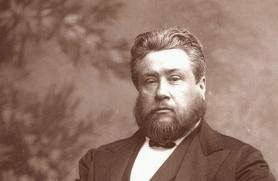
Did I mention I got a Nook? For Mother's Day? Fascinating little device. I finished my latest evening devotional book the other day and decided to look to see what I could get for free on my Nook.

One of the works I downloaded (for free! so cool!) was a collection of sermons by C.H. Spurgeon, sermons he gave to students at a pastoral training school where he taught. The one I read last night is about the need for pastors to be spiritually sound and growing themselves if they expect to shepherd a congregation. Kind of a "duh" for me; he spent a lot of time expounding on the idea, which I'm sure was for the benefit of the pastors he was preaching to, to cause them to truly examine themselves. (Sermons are rarely as effective when read as they are when delivered orally.)

But one section really jumped out at me:

"People go to their place of worship and sit down comfortably, and think they must be Christians, when all the time, all that their religion consists in, is listening to an orator, having their ears tickled with music, and perhaps their eyes amused with graceful action and fashionable manners: the whole being no better than what they hear and see at the opera -- not so good, perhaps, in point of aesthetic beauty, and not an atom more spiritual. Thousands are congratulating themselves, and even blessing God that they are devout worshippers, when at the same time they are living in an unregenerate Christless state, having the form of godliness, but denying the power thereof."

Ouch. Ouch, ouch, ouch. How little has changed since the 19th century. I hope it doesn't sound arrogant for me to say that I don't feel convicted that Spurgeon is describing me . . . but I do feel convicted that I may, in the past, have contributed to a church environment that allowed people to be this deluded.

Listening to an orator . . . interesting that I think I find myself equating the quality of a preacher's oration with his being led by the Spirit in his preaching, when it is certainly possible that a man could be a fabulous speaker and completely devoid of spiritual power.

Having their ears tickled with music . . . by all means, we should be sure the music we offer in worship is the highest quality we can offer, but I have been in far too many situations when the musicians (even some very godly musicians) were more concerned with the audience's response to the music than to how it would please God (note the term audience) . . . and I KNOW I've been in churches where the congregation was more concerned with their personal enjoyment of the music than they were with the worship they were doing in response to it. I've done that myself.

Eyes amused with graceful action and fashionable manners . . . in our day, might we equate this with interesting "stage decorations"? Lighting effects? High quality videos? Trendiness? (I remember a sermon once where the pastor invited us to text him questions to be answered in the next sermon.) Not that any of these is wrong, per se, but when they serve no purpose other than to amuse the eyes of the one sitting in the pew, as Spurgeon says (to keep the audience interested and attentive, to make them feel like they're in a "cool" church, to make them want to come back to see what neat thing the worship team will think up next), then there's a problem.

The words that hurt me here? They congratulate themselves because they think they must be Christians -- must be, because they go to church every week and enjoy it.

It grieves me that so many of our churches are so concerned with getting folks in the door and keeping them there, and they forget that pleasure and entertainment are rarely the means to an encounter with Christ that leads to regeneration (frankly, they are more likely to get in the way) and that the only reason we want people there is so they can be regenerated. Not to stroke our egos about our big numbers, or the positive comments we get after the service, or the reputation we have around town. Not so folks can have an enjoyable morning in a family-friendly moral environment that encourages them to be better people. To be regenerated. How many of us really understand what "regeneration" means these days? And yet we think we're leading people to it because they smile at us from the pews as we tickle their ears.

I think this is why we are so reluctant to connect ourselves to one of the megachurches here in San Antonio. I would rather be part of a small congregation where the people are there because they actually meet God there, whether the aesthetics please them or not.


Wednesday, May 14, 2014

My Nook

I got a Nook for Mother's Day. I'm still deciding what I think of it.

Don't get me wrong: I wanted a Nook -- or a Kindle, something of the sort. As I'm planning for my world literature class I'm teaching this fall, I realized how many books my students are going to need to purchase, and I started wondering if it made more sense to have them invest in one of these devices (which they could use throughout high school and beyond) and carry it back and forth to school each day instead of a book. Save money and prevent back strain. Still exploring that possibility.

But I mean, in general, I'm still deciding what I think of my Nook. I like that's it's small and light. This would be such a JOY to take on trips versus the pile of heavy books I usually carry in my suitcase (because yes, I take books on most trips -- if nothing else, I'm going to need to read at night to go to sleep). I like that I can highlight things and make notes about them and then erase those notes if need be later without leaving a mark of any kind.

What do I not like? It's not a book.

As I was searching the online store for books I could buy and read on my new toy, I found myself hesitating on many because I thought, No, that's one I want a hard copy of to put on my shelf. It seems like any book I love, I want in paper in my hand. C.S. Lewis? I want that in paper in my hand. I want the pretty cover and the spine showing on my bookshelf . . . not an icon on an electronic device.

Plus, just browsing the selections at the Nook store, I was a little disappointed at the prices. Yes, there were quite a few bargains, and some free books, also -- especially among the classics, which I would be inclined to buy. But a lot of current books cost $17 or so, which is sometimes pretty costly even in a hard copy. I can't imagine why a book needs to cost that much without the actual printing costs involved.

I blogged about a year ago about getting a smart phone and how I realized immediately that this was going to change my life. And Lord knows, it has -- some for the better, some maybe not. One of the first things I was excited about was that I could keep my to-do lists on the phone, and yes, that has been awesome. But the thing is, I still have days when I find I need to make a written list. I need to put a pen in my hand and a scrap of paper on the table and write down what I need to get done that day . . . group things by category . . . order them by priority . . . and I need to do it by hand. I need to cross each item off by hand. I can't explain exactly why. But it makes everything feel better, some days.

That's what I suspect I will find about my Nook. I think this will be a great thing for school, a great thing for travel, a great thing for my practical reading needs. But reading is not all about practicality for me. And when reading is about comfort, I think I'm still going to need a real, honest-to-goodness book.

Monday, May 12, 2014

Book Review: And Now For Something Completely Different

The book of Hebrews is a challenging portion of the Bible, heavy on Old Testament references to the Jewish law system that most modern Christians are pretty ignorant of. To read it and understand it requires knowledge of that system – or a guide to fill you in on the details. Matthew Martin's And Now For Something Completely Different strives to be that guide.
The author thoroughly dissects the book of Hebrews verse by verse, explaining in great detail the ideas in each as well as its place in the overall argument the book is making about the superiority of the New Covenant to the Old. Martin seems to have extensive knowledge in this area and offers a good number of helpful insights. The chapter titles alone gave me a good overall picture of the organization and argument being made in the biblical book.
However, on a more “micro” level, I didn't find Martin's guide that useful for me . . . although I think that's my fault and not Martin's. His intention seems to be that someone struggling with a particular section of, say, chapter four can turn to that part in the guide and get help in their understanding. And it probably serves that purpose well. To someone like me, on the other hand, who is just reading straight through to get an overall view of the entire biblical book, he often seems to be saying the same thing over and over. (My husband remarked that he had the same experience reading through his study Bible with all the notes; it's not really meant to be read that way.) Personally, I think I would have benefitted from a more general discussion of each chapter's main points, followed by the detailed analysis of each verse if I wanted to dig deeper or had a more specific question.
Martin also uses the King James Version of the Bible, which I find very difficult to understand in Hebrews. Few Christian writers use the KJV exclusively anymore other than the minority group who hold to the belief that it is the only accurate English translation we have – so I am led to assume that Martin is one of that crowd. That being the case, I was surprised then to find places in his analysis where he offered what he thought would be a better translation of a certain word or phrase.
My biggest beef with the book, however, came before I even started chapter one. Martin ends his introduction saying, “This book is written only for the benefit of any who wish to read another's opinions (grammatical errors included) and reflections on this marvelous work of inspiration.” Grammatical errors included? He's not kidding about that. Angel is sometimes spelled angel and sometimes angle. Altar and alter are interchangeable, no matter which meaning is intended. Weird spacing errors . . . random capitalizations of words (with no consistency throughout even the paragraph that contains them) . . . blatant misspellings that a spellcheck would have found (beng?) . . . various wording errors that would have been easily caught by a close reading of the text. For an English teacher and self-proclaimed grammar diva, it was very distracting. Not that I'm a total snob – I could appreciate the points he was making even with the errors (which is apparently what he asked me to do there at the end of the introduction). But it is easy to get the impression that there wasn't a lot of care put into getting things right -- which is not the impression one wants to give of a scholarly work. I found myself searching for a biography of the author to determine whether he had the credentials to justify his claims on the biblical text (such a biography is not included, by the way – I'm left to simply trust that this guy knows what he's talking about).

In the end, I felt this was a work with good intentions, a work with good potential, but a work in search of a good editor. If you are not troubled by editorial needs and are looking for a new analysis of the book of Hebrews, you can find this one right here.

Disclosure:  I received this book free from the publisher through BookCrash.com in exchange for an honest review.

Friday, April 18, 2014

Good Friday Meditations, Courtesy of Better Writers Than I

It's Good Friday. Holy Week is a blur this year. We've had company from Iowa this week, and my youngest is leaving with her class for a trip to D.C. on Sunday. It's been very hard to find any mental time to consider the meaning of this week. And I woke up this morning with absolutely nothing in my brain to blog about.

So, what do I do when I need focus and inspiration? I turn to other inspiring people.

Like David Platt, author of the book Radical and pastor who does the "Secret Church" series that you can find online. In his session on "The Cross and Christ", he talks about the Divine Dilemma: how can God be true to his nature -- be unconditionally loving and be absolutely just -- with sinful man?

How can God be just and righteous and yet forgive sins, pass over sins? That's where we see that before the cross is for anyone else's sake, what God is doing on the cross is for God's sake. God is displaying His justice. He is demonstrating His righteousness. Why did Jesus die on the cross? Who did Jesus die for? He died for me? Certainly. Died for you? Certainly, but not ultimately. Ultimately, Christ died for God. The cross is ultimately centered around a demonstration of the character of God. Watchman Nee said, "If I would appreciate the blood of Christ I must accept God's valuation of it, for the blood is not primarily for me but for God.” We need to hear this.

Yes.

And people like J.S. Bach. In my husband's hometown, Bach's "Passion of St. Matthew" is performed every Good Friday. I attended last year, and even though I've performed in it before, I was particularly moved this time. I kept the program with the lyrics printed in it and used them as devotional reading for several nights. Wonderful words . . . like these, responding to the disciples falling asleep in the Garden:

I would beside my Lord be watching
That evil draw me not astray

The sweet melody adds a lot. But yes, oh, Lord, would that I could be always watching beside You that evil draw me not astray.

And people like A.W. Tozer. In his amazing book, The Radical Cross, he describes how the church has watered down the cross from a thing of death to a thing of beauty:

When men made of it a symbol, hung it around their necks as an ornament or made its outline before their faces as a magic sign to ward off evil, then it became at best a weak emblem, at worst a positive fetish. As such it is revered today by millions who know absolutely nothing about its power.

The cross effects its ends by destroying one established pattern, the victim's, and creating another pattern, its own. . . It never compromises, never dickers nor confers, never surrenders a point for the sake of peace. . . So the cross not only brings Christ's life to an end, it ends also the first life, the old life, of every one of His true followers. It destroys the old pattern, the Adam pattern, in the believer's life, and brings it to an end. Then the God who raised Christ from the dead raises the believer and a new life begins.

This, and nothing less, is true Christianity . . .

Amen. I wish I could write like this.

Have a blessed Good Friday everyone, remembering the true meaning of the cross -- and a blessed Easter celebrating the new life He rose to bring us!

Friday, April 11, 2014

Create Your Own Literature Class

So, it looks like I'm going to be teaching Freshman English this fall. And, of course, my mind is already running with the possibilities. (I remember one night, when I had my first baby in the bassinet beside me and had not taught for two or three years and had no prospects of teaching for quite a while, I woke up and had an idea for a poetry unit. I stayed awake for a couple of hours mentally planning a poetry unit for Juniors. Never used it -- don't remember it now -- but it was an awesome unit. This is what I do.)

But some questions have come to mind as well, and I would be curious how my readers would answer them, so here goes:

1) What should we read? The class is "World Literature I", to coincide with the World History class their taking at the same time, so we're reading literature NOT written by Americans (that's for later) written from the beginning of history to around the time of the American Revolution. (Yes, that's a huge amount of history to cover in one year . . . I don't have any say in the history curriculum.)

And realistically, it's not actually "World" Literature. It's more "Western Civilization" Literature. Because no, we probably won't get to anything written in Africa, Asia, or South America during that time period. Not that such literature wouldn't be of value to read -- we simply don't have a lot of time.

So, given those parameters, what goes on the reading list? I skimmed the table of contents of a few college level world literature books just to get authors and titles in my head and see what stood out as "one can't graduate from high school without reading this" material. And there was far too much. We have to read a Greek play, yes? And some Homer. And something from the Canterbury Tales. And something from Dickens, certainly. A King Arthur something. What about poetry? Which poets are a must?

And Shakespeare! Shakespeare falls into this time period. When I ask myself, which Shakespeare plays is it necessary that every person with a high school diploma must read, my list is far too long.  Romeo and Juliet . . . Julius Caesar . . . Macbeth . . . Hamlet . . . A Midsummer's Night's Dream . . . Taming of the Shrew . . . (okay, the last one isn't a must except I just love it, and you have to get in some comedy). That's a year's worth of study right there! Sigh.

2) How much of each piece do we read? My first year of teaching, we were required to cover The Scarlet Letter, and I found that every other Junior English teacher in my school (and there were a few -- it was a big school) only had the kids read excerpts. They summarized many chapters for them and had them read the crucial chapters. I was stunned; I'm not sure it had ever occurred to me before that one could read a book that way, much less teach it in English class that way. But, frankly, it made a lot of sense there. We simply didn't have time to cover everything we were required to cover, and there are parts of The Scarlet Letter that really drag, after all.

But this fall, I get to determine my list of what I'm required to cover. (Well, for the most part.) So, the question is, do we read more material but read some of it in excerpts so they get at least an exposure to the piece, the author, the "type" . . . or do we read less material so we can read each piece thoroughly and deeply?

This depends, of course, on my goals for the course -- so that is the real question here. Is my goal that each student leave with a big overview of the vast library of literature the world produced in that huge swath of time? Is my goal that they learn to read any piece of literature thoughtfully and analytically? Is it my goal that they enjoy reading serious literature enough to want to read more for the rest of their lives? Is my goal that they find meaning in every piece we read that can make a difference in their lives now?

Yes. Simplistic answer, but ALL of those are my goals. And that's the problem.

So, anyway . . . I'd love to hear some perspective from the rest of you. Most of you are grown now, I believe. Looking back, what did you learn in high school literature classes that really made a difference to you today? Or what do you wish now you had learned? I'd really love to know.

Friday, February 14, 2014

The Queen of Appearance

I kind of like this picture -- don't you? Woman Sitting on a Throne of Clothing (my title). It's not representative of me at all, but it's very symbolic of many women in the western world these days. The Queen of Appearance seated on the source of her majesty and power. I am Woman; see my dress. And its accompanying accessories and sky-high pumps.

The second month of Jen Hatmaker's "experimental mutiny against excess" (which I referred to in my last post) was about clothes.  Out of her vast wardrobe, she chose seven items of clothing:

- a pair of nice jeans
- a dress
- four shirts (of varying levels of dressiness and formality)
- shoes (one pair of sneakers and one pair of cowboy boots -- see note)

[NOTE: Ms. Jen's "Council" (a circle of friends whom she drafted to help her set the parameters of her experiment and to keep her accountable) all agreed to make "shoes" a single item, but limited the scope of that item to two pair.  And undergarments were excluded from the fast. Understandably.]

As the month progressed, Ms. Jen found herself enjoying the fact that she didn't have to waste time and energy making decisions about what to wear (something my eldest has enjoyed about having a school uniform). She also learned a lot about how much importance she gives to her image -- and how little most people really pay attention to what you wear -- and how ridiculously much others DO pay attention.  And about the importance of regular laundering.

As I was reading this chapter, though, I kept thinking, this would be a breeze for me. I've gotten to a point this year where I seem to wear the same seven items of clothing all the time anyway.  (Okay, more than seven items, but still.)  And that was a bit of a rude awakening.

I do have excuses for my limited wardrobe, though. For one thing, I'm home most of the time. Nobody sees much of me except when I go to church, go to BSF, and drop the kids off at school. And until about a month ago, we were visiting different churches almost every week, so I could wear the same outfit to church each week and nobody would know the difference (and even if I wore the same outfit to the same church twice in a row, we didn't know anybody there yet, so nobody would pay any attention anyway).

But I realized that the biggest factor is EXERCISE. I have put "exercise" as a permanent item on my to-do list every day because that means I may actually get to it three or four times in a week. This means that when I get up in the morning, I dress for exercise; if I don't, I just cut the chances of my lazy butt actually going out to run by about a fifth. And on the days that I don't run, I end up wearing my t-shirt and sweat pants all day -- and putting them on the next morning so I'm again ready to exercise.

However, it's still kind of sad that I've come to look like a frumpy housewife every day. I'm sure my husband would appreciate my looking a little nicer when he comes home in the evenings . . . or at least would appreciate some variety in my appearance. There has to be a happy medium between needing to dress to the nines to feel good about yourself and not giving a flip at all about what raggedy threads are hanging off of your limbs.

This week, I substituted at my daughter's school two mornings. Which meant that I suddenly had to find "work clothes" in my closet. Wow! It was kind of exciting and kind of annoying and kind of frustrating, all at the same time. And it also made me wonder why, in a school where the students are required to wear uniforms, the teachers are given the "freedom" to express their individuality in their dress.

"Freedom". I think if I were teaching there, I'd find it more freeing to have a uniform. Maybe if I start teaching there, I'll impose one on myself. Standing in solidarity with my students. Yeah.

But it won't be a pleated plaid skirt. I haven't killed my pride that dead yet.

Wednesday, February 12, 2014

A 7-Food Fast . . . Wow

I'm reading a book by Jen Hatmaker called 7: An Experimental Mutiny against Excess.  I expect to write about this book several more times, so you may as well go out and buy it for yourself.  It's a pretty amazing book.

The premise is, Ms. Jen decided to do some radical fasting in seven different areas of her life for a month each.  The first was food. For one month, she ate only seven foods:

- chicken
- eggs
- whole wheat bread
- sweet potatoes
- avocadoes
- spinach
- apples

She did a bit of research ahead of time to be sure that these foods would give her a good balance of the nutrition she needed. She allowed herself salt and pepper for seasoning and a little bit of olive oil for cooking in when necessary.  But nothing else. Only water to drink.

Like I said, radical.

This was difficult for her because she's something of a foodie. I think it would be difficult for me because I'm not at all a foodie. I'm a rather picky eater. I can eat all of these foods, but only when served just right. I like my sweet potatoes fried. I like my avocado with salsa and chips. I like my spinach doused in dressing -- or if it's cooked, layered between lasagna noodles and tomato sauce. Each of these foods are fine, but to eat only these foods would be awful.

So, why did she do it? Well, as I said, it was a fast. And she got all the benefits out of it that one gets from a fast, particularly a recognition of how much excess there is in her life (note again the sub-title) and the freedom of surrender and submission and giving up idols. She also commented on the extra energy she had . . . that her allergies were gone . . . that her skin was so much cleaner and brighter.

It reminded me of when I changed my diet a few years ago. I was seeing a holistic kind of doctor for help with my sleep issues, and he got me changing a lot of things about how I ate.  I blogged about it at the time (here). About how I was trying to eat more variety of foods, more natural foods, etc.  (I also immediately blogged about crashing and burning on it all one day. Hubris.) I lost a good amount of weight during that time. Felt a lot better. Looked a lot better. (Didn't sleep a lot better, but I guess you can't win 'em all.)

I've been aggravated at myself for what my eating habits have become again. And something about Ms. Jen's 7-food fast appealed to me . . . but then I know if I actually tried to do that, I would want to shoot myself within a couple days. That was for a month -- I need to make changes that I can sustain for the long-term. Changes like I made before.

Sigh. Why can't the lessons I learn stay learnt?

Friday, October 25, 2013

Teaching Science to Non-Scientists -- Which is MOST of Us

If you read here much, you've probably picked up on the fact that I'm more of an English/History gal than a Math/Science one. My girls are the same -- which is why I'm quite interested in how they are taught math and science, because I suspect some of my dislike for science, anyway, is related to the way I was taught.

So, I was pleased to be invited to a meeting at my youngest's school to discuss the science curriculum they may implement starting next year. (Although I'm still not quite sure why I was invited. I may have signed up for a committee at the beginning of the year. Or I may have annoyed the principal too much with my questions about high school. In any case, I was happy to be there.)

The curriculum they are looking at is brand new.  There are only a couple of textbooks written at the moment, but more in the works. What I liked about them is their approach.

The author (who presented at the meeting) explained that most science textbooks are massive, back-breaking tomes stuffed with far more information that a person can master in a year. (No lie -- have you looked at a high school science textbook lately? Picked one up? Holy smokes.) Because of the overload, students have no choice, really, but to fall into the pattern of cramming for the test and then immediately forgetting everything they've learned to make room for the next flood of information.

(Can I hear an "amen"? Preach it, brutha!!)

This guy's textbook's were small. He said he pared down the content to only the essentials for the course and then focused on mastery of those essentials

Mastery!!  Actually learning the stuff. What a concept!

He has taught science for many years and has seen how much more effective this method is. But I didn't need to hear that to be convinced -- COMMON SENSE tells me that's a much more effective method.  What possible good does the cram-test-forget method accomplish?

He also recommended only 5-6 real experiments during the year and teaching the students to write up high quality lab reports over those experiments. Again, an amen from me. Hands-on stuff is important . . . discovery learning has its place . . . but I've observed that the plethora of experiments my eldest has done in her science classes have not accomplished what the teachers hoped they would. Again, it was overload. Do a few really good ones and integrate the writing skills with that.  (I've become more and more convinced that writing cannot be taught well in isolation by high school -- writing has to be about something.)

This guy also had recommendations about math offerings at the high school level, because math and science are so connected.  The one I liked: for the kids who are not math whizzes and who DON'T need to learn trigonometry and math analysis and pre-calculus, offer them AP Statistics after they complete Algebra 2.  (Aha!!) Much more practical, but also at a high academic level to push them a bit . . . and they get college credit when they're done.  Love it.

Really, I loved it all.  It was enough to make me want to be a science teacher. (Ew . . . okay, that was hyperbolic.  Big words. Whew. I feel better.)